
Why strategy fails when it is disconnected from operating reality

Strategy rarely fails because it lacks ambition. More often, it fails because it asks the organisation to become something its operating reality cannot yet support.
On paper, the strategy can look convincing. The priorities are sensible, the goals are attractive, and the direction feels clear enough in the boardroom. But once it meets the day-to-day reality of the business, something starts to give. Decisions slow down, trade-offs become muddled, delivery loses coherence, and the distance between what leaders say matters and what the organisation is actually able to do begins to widen.
That gap is where a great deal of strategic disappointment lives.
The problem is not that strategy sits at a high level. It has to. The problem begins when strategy is treated as though it can succeed independently of demand, capability, flow, decision-making, and the operating conditions people are working within. At that point, it stops being a useful direction and starts becoming a kind of wishful overlay, sitting above a system that has not really been understood.
Most organisations know this feeling, even if they would not describe it in those terms. A new strategy is launched, priorities are communicated, initiatives are created, and energy rises for a while. Then the existing system begins to reassert itself. Legacy structures pull work back into silos, demand continues to arrive through too many channels, shared services become congested, decisions get escalated because ownership is unclear, and teams find themselves caught between the new direction and the old realities of how work actually gets done. The strategy remains in place, but the organisation goes on interpreting it through existing habits, constraints, and pressures.
That is why strategy so often ends up being experienced as aspiration at the top and overload everywhere else.
When strategy is disconnected from operating reality, people are left trying to honour priorities that have never been reconciled with capacity, capability, or flow. Everything can sound important at once. Teams are asked to accelerate while maintaining quality, deliver change while protecting the core, improve customer outcomes while staying within tight local budgets, and respond to new opportunities without letting anything else slip. None of those tensions are unusual, but if the operating model has not been designed to handle them well, strategy quickly becomes a source of strain rather than clarity.
This is also where leadership teams become unintentionally misleading. They believe they are communicating intent, but what people further into the system experience is a growing pile of competing demands. The language says focus; the operating reality says cope. The language says customer value; the measures still pull people back towards local efficiency and short-term profitability. The language says ownership; the decision rights remain vague. Over time, people learn to treat strategy less as a governing direction and more as another layer of expectation they somehow have to absorb.
That is when execution begins to look poor, even though the deeper issue is misalignment.
A strategy that is grounded in operating reality does something different. It takes seriously the conditions in which the organisation is expected to deliver. It recognises that demand has to be shaped, not just accepted, that capability has to be built where the strategy depends on it, that priorities need to survive contact with real trade-offs, and that flow matters because it shows whether the system can actually move value in line with the stated direction.
In other words, it connects strategic intent to the way the organisation works.
That does not mean strategy becomes narrower or less ambitious. If anything, it becomes more credible. It starts to account for what the system can currently absorb, where it is generating its own strain, and what has to change in the operating conditions for the strategy to become real rather than merely well worded. It is much easier to scale a strategy that has been shaped with the organisation's real constraints and behaviours in mind than one that relies on determination to overcome structural friction.
This is why the strongest strategies tend to feel clearer downstream. They do not generate endless translation work because they have already been thought through in relation to how decisions will be made, how priorities will be governed, where capability is thin, and where work is likely to stall. They do not remove complexity altogether, but they make it much easier for people to make sensible choices without constant escalation.
The opposite is true as well. When strategy drifts too far from operating reality, organisations compensate with more governance, more reporting, more programme structures, and more pressure. That can create the appearance of control, but it rarely fixes the underlying disconnect. More often, it adds another layer between strategy and the work, making it even harder to see why progress feels slower and noisier than expected.
If strategy is not taking operating reality seriously, it is not really strategy yet. It is intent without traction.
That is the test worth applying. Not whether the strategy sounds right in principle, but whether the organisation is actually set up to make it real. Can demand be filtered and prioritised in line with it? Does the necessary capability exist, or is it assumed? Are the operating conditions helping people make the right trade-offs, or quietly pulling them in another direction? Does flow suggest the system can carry the weight of the strategy, or is strain already visible?
Those are not operational footnotes. They are strategic questions.
When strategy is connected to operating reality, it becomes much more than a statement of intent. It becomes a believable direction that the organisation can actually move towards.
How Adaptavis helps
We help organisations connect strategy to the way work really happens. That means looking beyond the strategy itself and into the demand, capability, decision-making, flow, and operating conditions that will determine whether it becomes real. When those things are aligned, strategy stops being something the organisation talks about and starts becoming something it can actually deliver.
In this series
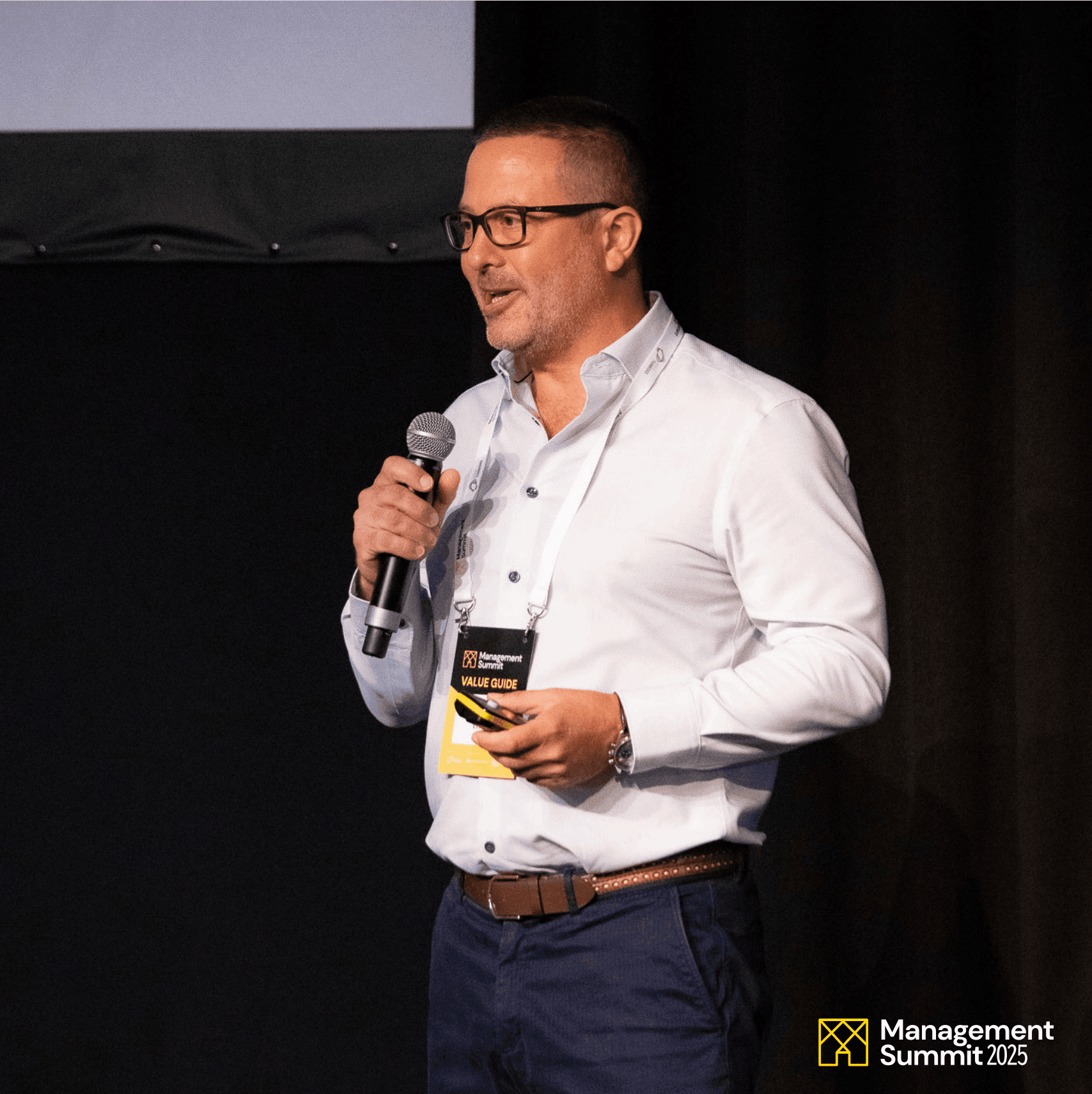
James Enock
Founder, Adaptavis
25 years working inside complex organisations on performance, delivery, and change.